


By Lauren Fairbanks and J Pete Laney
TAD Governmental Affairs
With the open races for U.S. Senate and Texas Attorney General, Texas’ 2026 elections are shaping up to be some of the most competitive in recent memory, starting with the primary election on March 3. Early voting begins Feb. 17. If no candidate receives a majority of the vote in the primary, the top two vote-getters will compete in a runoff on May 26.
In the Texas House, 21 state representatives have decided not to seek re-election. Another 38 state representative incumbents will have primary challengers—28 Republicans and 10 Democrats.
Across the Capitol, 16 Texas senators are up for election this cycle. Five senators are not seeking re-election (Nichols, Creighton, Hancock, Middleton and Birdwell). Three senators will have primary opponents (Hall, Schwertner and Zaffirini) and nine will face an opponent in the general election.
Candidate filing ran Nov. 8 to Dec. 8, so the slate is officially set for March 3. The Texas Tribune has compiled a comprehensive list of candidates in each race. You can view the list in its entirety here as well as input your address here to get a personalized ballot for state races.
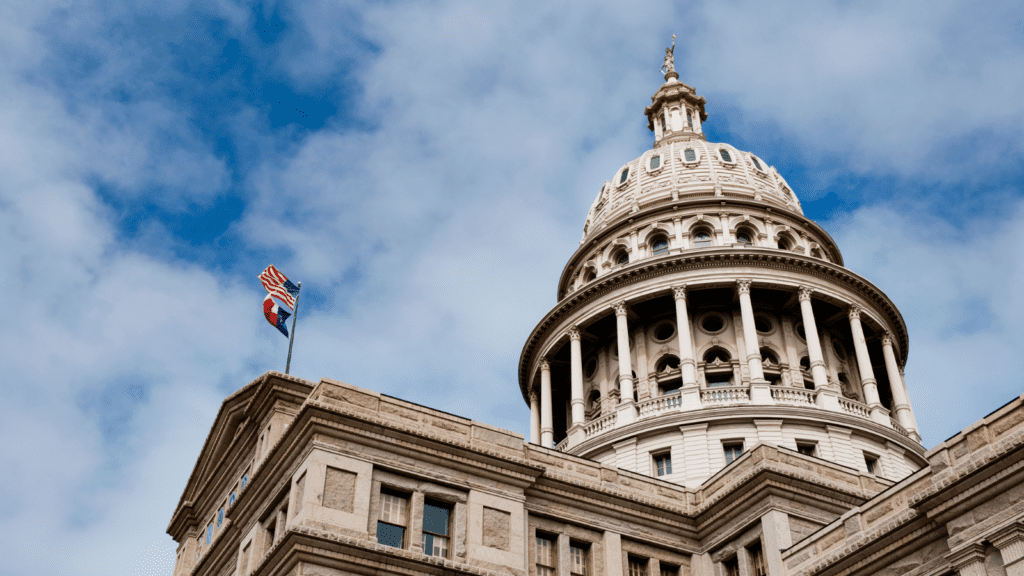
Meanwhile at the Texas Capitol, it is back to business after the holidays. House and Senate offices have been notified by the Speaker and Lieutenant Governor that recommendations for interim charges must be submitted in February. Final charges – issues that legislative committees will be asked to study in preparation for the next legislative session – are expected to be released following the primary election. One subject that is likely to be considered is property tax reforms.
Since announcing his bid to run for another term, Gov. Greg Abbott has been promoting his idea to abolish Texas’ school property taxes while Lt. Gov. Dan Patrick wants to again increase the homestead exemption for school property taxes.
In addressing property taxes in the past, the Legislature has spent tens of billions of dollars to reduce the annual bill homeowners and businesses pay each year to help pay for schools. State lawmakers have also tightened limits on how much local governments can increase taxes to pay for many of their services. Going into the upcoming session, Abbott’s idea of completely eliminating property taxes would seemingly require the state to pick up the whole tab for funding schools, while Patrick wants to again increase the homestead exemption for school property taxes, unveiling a plan to drive down property taxes by further hiking the amount of a home’s value that can’t be taxed to pay for public schools and lowering the age at which Texans qualify for additional relief on their school tax bills. Both camps have said they look forward to working together, along with House Speaker Dustin Burrows, to reach an agreement that a majority, or even a super majority, of the Legislature will have to agree with in upcoming session.
Also at the executive branch, Abbott has announced several appointees to state agencies, boards and commissions in recent weeks. Notably, he has made appointments to the Texas Agriculture Finance Authority (TAFA). TAFA provides financial assistance for the expansion, development and diversification of production, processing, marketing and export of Texas agricultural products and was part of a revamp in the 2025 legislative session which included adjustments an expansions to the TAFA Board. The Legislature appropriated $100 million to TAFA to be given out in loans and grants. Getting the new TAFA Board members in place is another step forward as they start to consider grant applications.